I'm Steve — MiniWorkoutDad!
Squeezing More Out Of Phase 4
Phase four is the third isometric exercise in a trio of upper body builders. But, what muscles are you training and how can you squeeze the most out of it, but skip injury?
We can’t help focusing more on what we see. It’s human nature! And it’s why there’s a lot more focus in “fitness” on abs, pecs and biceps, than the flipside we don’t see in the mirror. But, actually, those unseen muscles around the back are just as important to being strong and capable. So, creeping up from behind is Phase 4; the back builder. Let’s dive into why Phase 4 is so fundamental and how to do it better…
What does Phase 4 work?
Performing Phase 4 correctly challenges muscles across your upper back primarily; use of your arms (biceps) should be secondary. Maintaining the squat, bent-over posture creates a lessor demand on the muscles in your legs, bum, “spinal core” and lower back.
The muscles worked :-.
- Holding your lifting posture: Gluteus Maximus, Quadriceps, Gastrocnemius (calves) and lower back.
- Maintaining the hold and squeeze: Rear Deltoids, Trapezius, Rhomboids, Teres Minor & Major, Infraspinatus, Latissimus Dorsi and more.
- Holding the weight: Biceps and grip muscles of forearm.
Reverse Cycle Workout Video
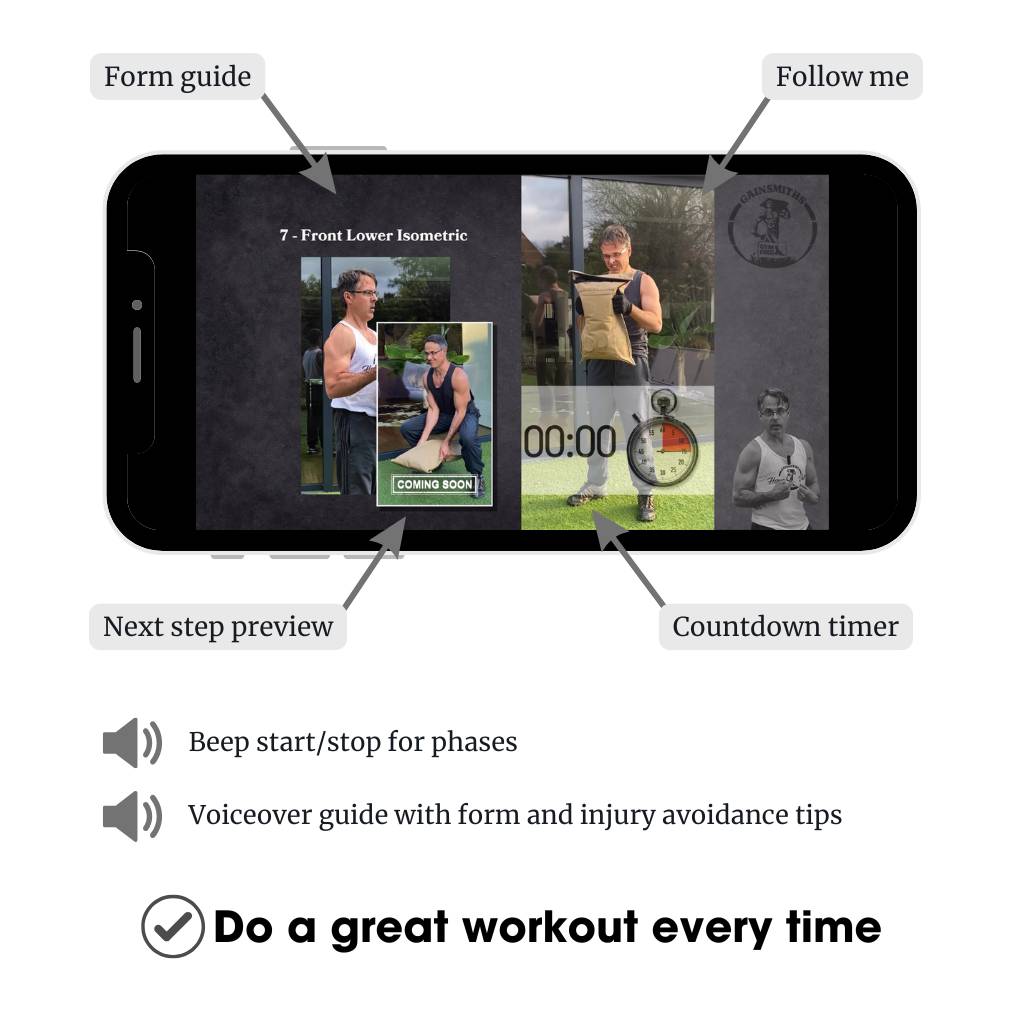
Switch up progress Evolve your workouts Add a new challenge Unlock…
Find out moreWhile Phase 2 warms up your back, this is the main act. Pendlay Row – which it’s based upon – is considered by seasoned lifters to be the king of exercises for back strength.
Where will you see the biggest benefits?
You cannot have a strong, capable body without developing strength across your upper back and here Phase 4 delivers!
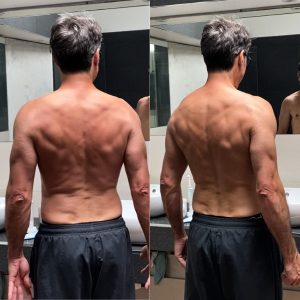
Upper & mid back
You can see the strength developing in my back – from the V of the Trapezius to the Latissimus Dorsi under the arms and all the scapular positioning muscles in-between.
The squeeze I’ll describe later is essential to development beyond the Latissimus Dorsi.
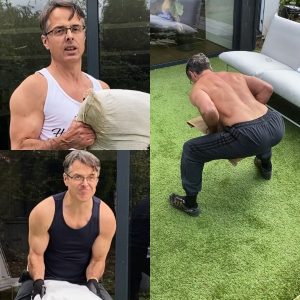
Biceps & forearms, lower back, butt, legs
Left side: remember there’s no specific bicep exercise in this workout, but this exercise recruits the biceps in a supporting role.
Right side: You can just about see my glutes stretched and the pull on the lower back.
Attacking Phase 4 with determination will build a solid foundation for lifting, carrying, pulling, climbing, rowing and swimming.
Pointers to perform Phase 4 correctly
The critical part of Phase 4 is how you use your arms. Your natural instinct may be to lift and hold with your biceps. This is not the objective. Instead, you must minimise the input from your arms and promote the use of your back.
When rowing, you pull your elbows back using your back muscles. Your biceps are secondary. It’s the same here, except you are bent over!
“Arms like hooks” is the best way I’ve heard it described. You’re pulling up the elbows and everything beyond that down to your hands is just a “hook”.
Bringing your hands to your tummy not your chest encourages you to use the correct muscles. If your hands rise to your chest, you are almost certainly liftng mainly with your biceps.
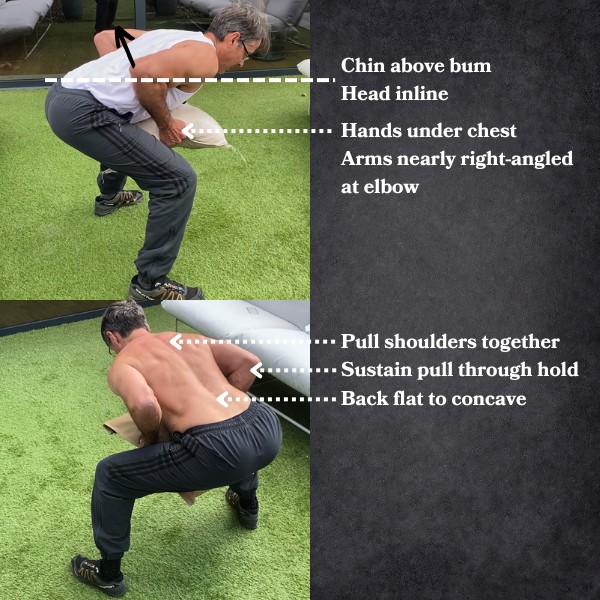
Once you’ve drawn the weight up to you, don’t stop there! Two “squeezes” now power this isometric:-
- Trying to lift your elbows even higher
- Trying to pull your shoulder blades together across your back, so you’re squeezing in the middle.
It’s like you’re trying to pull the bag/weight through you and tear it into two across your torso!
Don’t arch your back in the lift or hold. Keep your back flat to slightly concave to avoid injury. You will feel some stress on your lower back where you are “hinged” over. Be careful if you have weakness in this area.
Try to keep your head in line with your body, rather than pulling it up/ backwards.
Don’t forget to breathe!
Pro tip: doing some “rows” at the end of your hold will stimulate these muscles even more! Lower and lift the weight in a rowing motion, while focusing on pulling up from your elbows.
Phase 4 will help you build a rippling back, but we don’t do it for the mirror. The role of these muscles in positioning, supporting and resisting movement of the shoulders and arms is fundamental to leading an active life. Let’s build the physical capabilities that help you live life to the full for longer!#
Steve — MiniWorkoutDad
Was this useful? If you don’t want to miss out on tips like this (and haven’t subscribed already), just submit this form ⇩