

I'm Steve — MiniWorkoutDad!
Leveraging Loss Aversion to Get Consistent
What if the secret to you staying motivated and disciplined is a simple shift in fitness focus? Read on to find out how…
Skipped workouts, tapering enthusiam and, before you know it, you’ve quit quietly… sigh.
Is this the story of your fitness life? It was mine!
Being consistent, long-term, is the most challenging part of achieving fitness goals. It’s easy to lose momentum or get knocked off course by life.
But maybe the problem isn’t you got too busy or this happened or that. But, actually, you just focused on the wrong goal?
99% of fitness is focused on gaining something.
That’s not the best way to motivate people
Scroll Instagram and you’ll notice nearly everyone in fitness is pushing what you stand to gain. Even weight loss is “sold” on benefits: improved health, feeling sexier, increased energy, etc. Great, but less motivating than you imagine.
In fact, there’s a scientifically-proven more powerful motivator: loss aversion.
Put simply, I know that you are more motivated to avoid loss than to acquire equivalent gains. That’s because losing is painful and we seek to avoid pain.
(Savvy marketing folks know this too, so see if you can spot it in ads or when you’re shopping online!)
On top of that, I also know you are more willing to believe you’ll lose.
Negativity bias means you notice bad things more, so you expect more bad than good
Negativity bias means you tend to notice one bad thing happening to you more than a mountain of good stuff.
This “pseudo-certainty effect” makes future losses feel disproportionately more likely. So, if I tell you that you risk losing something you value, you’re much more likely to believe that, than if I tell you that you could gain something.
You can’t help thinking like this. But it can help you enormously.
Think about why you clean your teeth. How did your parents get you to do this tedious thing twice a day as a child?
I doubt it was, “so you will have whiter teeth”. No, that habit formed because you didn’t want to lose your teeth – pure loss aversion.
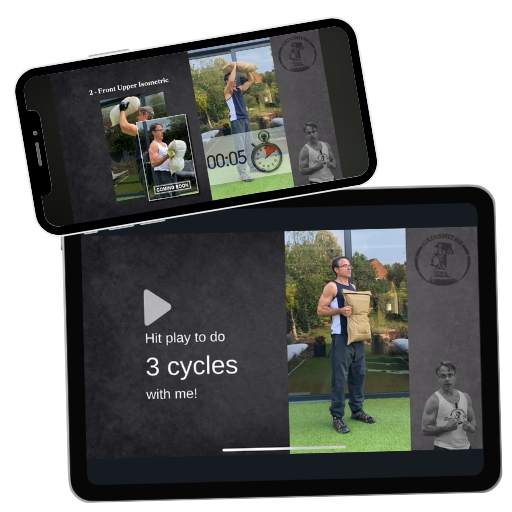
Tick every box in 25 minutes, 3 times a week Do the simple workout you can stick to and…
Find out moreFlipping the goal like this is a motivation and discipline game-changer. Here’s how to do it, so you workout more consistently and achieve your goals…
Step 1: Know Why You WILL Lose
I mean really understand what is going on in your body. The unwanted processes that are, if left unchecked, stripping away your physical capabilities, dissolving your muscles and syphoning away your vitality and appetite for life.
Am I being dramatic? I mean to be! Because you should truly fear the path of doing nothing.
I want you to be horrified by what you read, so Google “Sarcopenia”. There is no drug that can prevent it and it’s the biggest factor in your loss of physical function as you age.
And, that’s just the tip of the iceberg. Many undesirable aspects of old age are symptoms of – or made worse by – inactivity, not ageing.
We lean on the crutch of modern medicine to alleviate problems caused by our own inactivity. But, those medicines cannot prevent the fundamental loss. You can!
Step 2: Appreciate What It Will Cost You
Time to take a long hard look at what you stand to lose. What could life look like in 10 or 20 years time, if you don’t take action to stop the loss?
Will you be able to travel and see the world, or will you spend too much time in a doctor’s waiting room?
Will you be able to play with your grandkids or will you be physically incapable?

Will you be the rock at the centre of your family’s life, or sidelined as “the patient”?
Could you be suffering from one of the many diseases you’re less likely to experience – and more likely to survive – if you exercise regularly?
What is it that you don’t want to lose or fear losing? Imagine what that would be like. This is the loss you’re going to fight to avoid.
Step 3: Believe In The Loss Prevention
You’ve got to believe strongly the action you take will help prevent your feared loss.
If you don’t trust in your solution, no amount of certainty and fear of loss will motivate you. You’ll just end up thinking “what’s the point?”
There are no instant results from workouts or fitness activity. So, you need confidence in your process to keep you positive, even when you see no change.
Make sure you trust your process by answering your own concerns, before you commit to action.
This step gets easier and easier, once the positive effects of your workouts or exercise become more noticeable. You’ll have evidence it’s working!
Step 4: Reverse Every Goal or Hope Into Not Losing
Square the circle: convert every goal, hope and aspiration for your fitness into avoiding loss.
Instead of working out to gain muscle, make your goal to avoid losing more of it!
Rethink every positive benefit: not losing more fitness, not losing mobility, not losing strength or confidence by taking action.
And, when you’re digging deep to get your workout out done, focus on the losses it’s preventing.
On page 5 in my workout guide (get it free here ), I encourage you to use positive affirmations instead of just counting. Guess what?! Make those loss averting too: “I do this to avoid losing more strength and the ability to do [something you love]”.
Wrapping up
Sticking to fitness isn’t easy, but by leveraging loss aversion, you can achieve your fitness goals. Tap into this powerful psychological motivator by focusing on what you stand to lose, rather than what you might gain. Embrace this mindset shift and doing your workout soon becomes a non-negotiable part of life.
Steve — MiniWorkoutDad
Was this useful? If you don’t want to miss out on tips like this (and you haven’t subscribed already), just submit this form ⇩