

I'm Steve — MiniWorkoutDad!
How Your Workout Could Slow Ageing
Science is discovering that skeletal muscle can slow ageing, delay frailty and reduce the risk of developing the most serious older-age diseases. Discover how resistance training could be your fountain of youth.
Is Your Workout Key To A Long Life Well Lived?
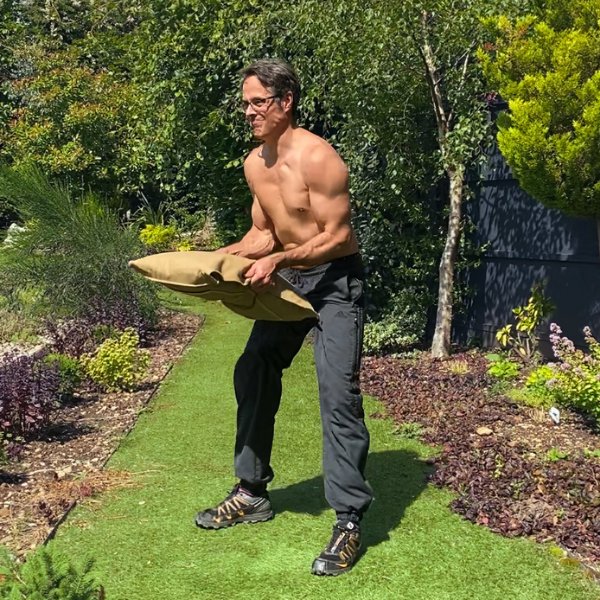
If you need a good reason to embrace the discomfort of working out, living longer (as in living not existing) would surely be near the top of your list?
Common sense tells us that exercise must surely contribute to living a long and active life, but what’s the scientific proof?
Well, this subject is a rabbit hole of studies, meta-analyses and reviews. Science rarely produces definitive answers; it more often generates new questions! Hardly surprising, given how complex the human body is.
We must accept “the evidence suggests” rather than “science proves”.
Delaying Frailty, Slowing Ageing, Avoiding Diseases
The evidence suggests (sorry!), that a workout that promotes the maintenance of skeletal muscle should improve life longevity and quality of life in 3 main ways:
- By delaying frailty
- By regulating (slowing) systemic ageing
- By lowering risk of age-related diseases
Delaying Frailty
Become frail, fall over, break bones (especially a hip), never recover: sadly this is a common final chapter in many old people’s lives. I lost my own grandad through this morbidity.
It is intuitively logical that muscle loss is associated with frailty, but also identified by science…
“[skeletal muscle loss] is also associated with acute and chronic disease states, increased insulin resistance, fatigue, falls, and mortality” [1]
It is loss of muscle strength and endurance that leads to more frequent tripping over hazards. We get tired and fail to pick our feet up. Loss of power then makes us too slow to react to the stumble.
In the event of a trip, we have a very brief opportunity to spare ourselves a nasty fall. Unfortunately, we lose the necessary fast twitch “reaction” fibre muscles most rapidly with age.
At 51½, I decided to slow ageing, by following the science here and this happened…
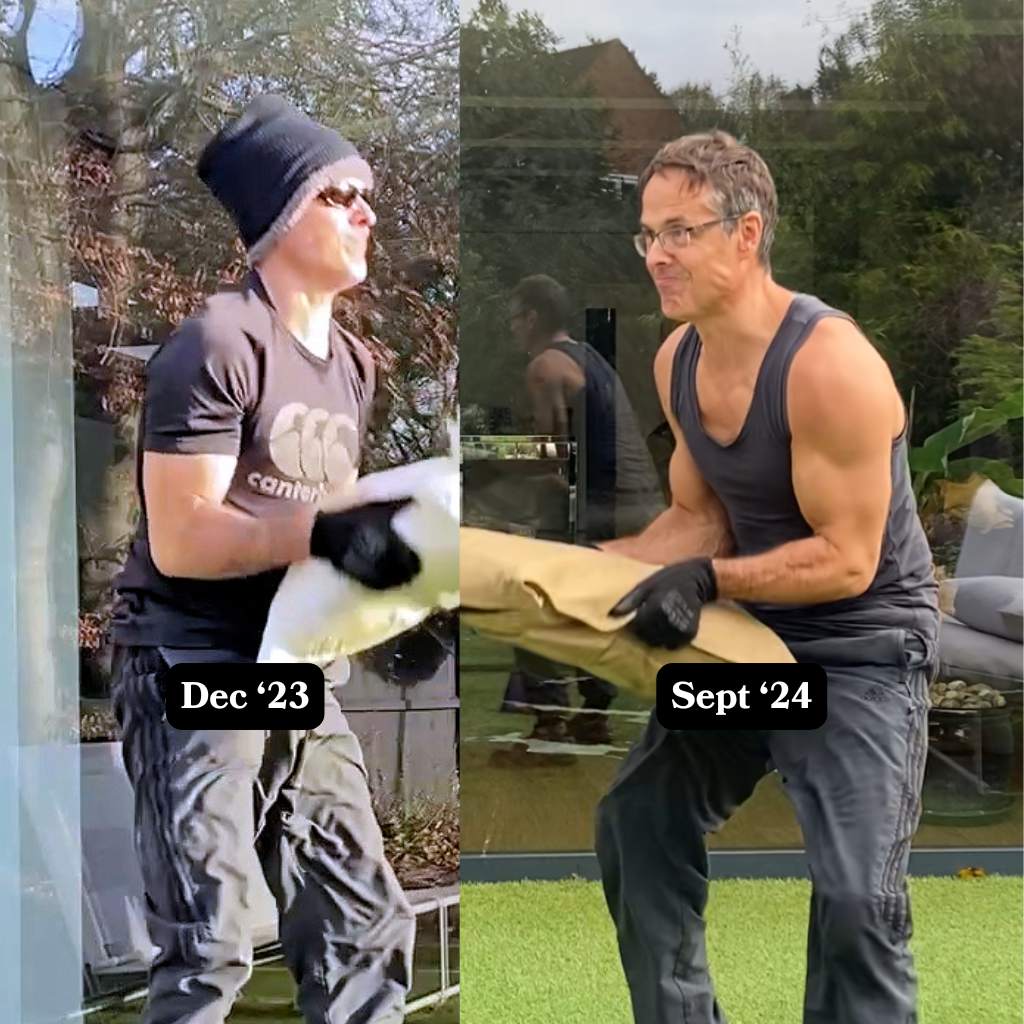
Because I started doing this 75-mins-a-week method of home fitness.
“[Through Sarcopenia] Atrophy of muscle fibers is disproportionally distributed with higher atrophy rate of type IIa fast twitch (FT) muscle fibers and their motor units” [2]
Besides life-threatening falls, creeping frailty gradually removes the joy from life by stopping us from doing the things we want or love.
Regulating (Slowing) Systemic Ageing
There is growing evidence that skeletal muscle is an “organ” that actively influences ageing; that it’s a “’sentinel tissue’, i.e. the earlier onset of age-related degeneration in muscle may affect ageing in other tissues.” [3]
So, it’s not just that we lose muscle as we age but, perhaps, that we age as we lose muscle.
Science puts muscle in the room with the gun, even if science can’t prove who pulled the trigger…
“In humans, the mortality rate and pathogenesis of many age-related diseases is associated with the functional status, metabolic demand, and mass of skeletal muscle (Anker et al., 1997; Metter et al., 2002; Nair, 2005; Ruiz et al., 2008), suggesting that this tissue is a key regulator of systemic ageing. Recent findings in mammals and Drosophila (fruit flies) confirm this hypothesis…” [3]
The mere possibility that loss of muscle might speed up ageing, surely makes the case for fighting to keep or develop what muscle you have even more powerful?!
Lowering Risk of Age-related Diseases
What diseases do you worry about developing in later life? Cancer, Alzheimer’s and Parkinson’s are quite possibly amongst them?
Cancer was the second biggest killer of US senior citizens in 2022, according to the CDC.
While the UK’s Office for National Statistics revealed “dementia and Alzheimer’s disease”were the leading cause of death in the UK in 2022.
And, a 2022 Parkinson’s Foundation-backed study revealed that nearly 90,000 people are diagnosed with Parkinson’s disease in the U.S. each year, with the rate of diagnosis rising steeply.
Scientists say staying strong & fit delays ageing & reduces risks of life-limiting diseases…
I do that in 75-mins a week by following this workout video!
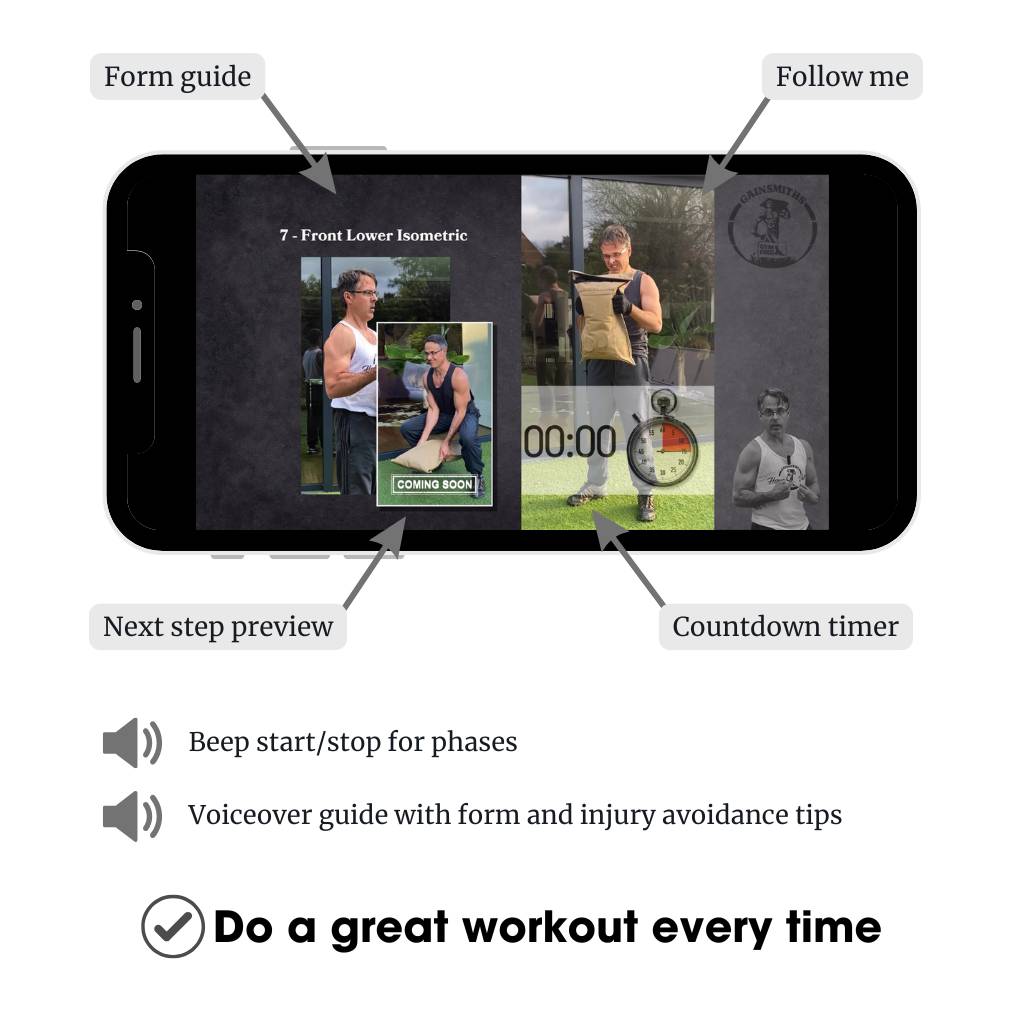
But, through the maintenance of skeletal muscle, everyone has a way to reduce the risk of developing these dreadful diseases…
“Epidemiological studies in humans suggest that skeletal muscle ageing is a risk factor for the development of several age-related diseases such as metabolic syndrome, cancer, Alzheimer’s disease, and Parkinson’s disease.” [3]
Of course, to accompany greater longevity we need quality of life. But, pain, immobility and loss of physical capabilities can suck the joy out of later life. Here too, avoiding skeletal muscle loss has benefits…
“Of the chronic disease states, sarcopenia has been especially associated with rheumatologic conditions, especially rheumatoid arthritis (RA) in women” [1]
What’s This “Sarcopenia”?
When science suggests having skeletal muscle means better health with age, it’s rather unfortunate that ageing is linked to loss of skeletal muscle.
You may have heard of Sarcopenia? It’s the age-related, involuntary loss of skeletal muscle mass and strength.
Sarcopenia can begin as early as your thirties! And, it appears that skeletal muscle mass and strength decline in a linear fashion, with up to 50% of mass being lost by your seventies. [1]
Given all we are reading about the importance of skeletal muscle mass, this is clearly not desirable. Fortunately, there’s a low cost, easily accessible and proven remedy that’s available without prescription.
How Do You Prevent Sarcopenia?
What’s the opposite of losing muscle? Building it!
If you’re regularly in a state of hypertrophy – even witnessing your muscles getting bigger, not smaller – then you are stalling Sarcopenia.
And, that’s why you must include resistance training – for its potential to stimulate hypertrophy – in your fitness regime.
Scientists have shown resistance training can even reverse Sarcopenia in very old age…
“Results of clinical intervention studies in even the oldest and frailest nursing home residents have demonstrated significant functional improvement through a combination of nutrition and resistance exercise [1]”.
But, why wait until then?

Through my workout regimen, I have shown that 75mins a week tough love can build muscle and fitness. Now, you know that outcome has the power to transform your later life, surely you don’t need a better reason?
Steve — MiniWorkoutDad
Was this useful? If you don’t want to miss out on tips like this (and you haven’t subscribed already), just submit this form ⇩
References
1 – Sarcopenia in older adults, Jeremy D. Walston. Published 2012.
2 – Strength and muscle mass loss with aging process. Age and strength loss, Karsten Keller and Martin Engelhardt. Published 2013.
3 – The influence of skeletal muscle on systemic aging and lifespan, Fabio Demontis, Rosanna Piccirillo, Alfred L. Goldberg and Norbert Perrimon. Published 2013.