

I'm Steve — MiniWorkoutDad!
Science is proving that protein intake needs to change in later life
Too long, didn’t read (summary)…
Protein is essential for building muscle, but following national Recommended Dietary Allowance’s may not provide sufficient protein as we age.
Eating 30g or more of protein in each meal may help combat age-related decline in muscle protein synthesis (MPS); smaller quantities of protein might not be effective.
Eating carbs with your protein slows down MPS in older adults. It’s not clear this reduces overall MPS.
It’s a myth that you should eat protein within 60 minutes of working out. Exercise can stimulate muscle protein synthesis for up to 12 hours, making this the best time to get your protein.
Eating a higher protein diet will not damage your kidneys, unless you have pre-existing disease.
↓↓↓ Read the full article to find out more ↓↓↓
The thing about protein is…

(skip this if you know about amino acids!)
Protein isn’t actually a single “thing”; it’s the name for the group of 20 different amino acids that perform different functions in your body. These amino acids are like a collection of tiny building blocks. Your body can produce many amino acids, but there are 9 found in proteins that it cannot. These are known as “essential amino acids”.
The protein we eat doesn’t necessarily contain all nine essential amino acids. Complete proteins include: beef, poultry, fish, eggs, dairy, soy, quinoa, buckwheat, hempseed, chia seeds. Incomplete proteins include: nuts, seeds, beans, legumes, whole grains, tofu, rice and vegetables. Plant based proteins often lack methionine, lysine and tryptophan amino acids.
When you eat protein-rich foods, your body breaks it down into the amino acids and then reassembles them into whatever type of protein it needs at the time. Some proteins help build muscle, others support your immune system, and some even carry messages between your cells.
How much protein do you need?
The Recommended Dietary Allowance (RDA) is near-identical in the US, UK, Canada and Europe at 0.8 g/kg/day (to one decimal place!) for all adults over 18 years old. But, experts have been calling for a higher dosage recommendation in older adults for some time.
Getting older triggers two negative impacts, that may justify higher protein intake. Firstly, the muscle loss caused by Sarcopenia starting in your thirties. And, secondly, it has been found that older adults synthesize protein into muscle less effectively.
Since I started my workout, I don’t just eat more protein…

Because, I’ve been able to stop starving myself. Here’s my complete regimen
Increase protein with age
Some experts claim there’s enough research already to justify stating protein RDA in terms of what is optimal for health. And, some believe that the recommendation should be significantly higher in older adults.
Optimal RDA recommendations range from 1.2g/kg/day (a 50% increase) to as much as 2.0g/kg/day (2.5 times as much!) for older adults. Some evidence shows that taking more protein daily could compensate for the lowered muscle protein synthesis (MPS) response noted.
How old is older? Well, definitely once you hit 65 years. But, in research there’s a tendency to compare much older with much younger subjects (to exaggerate differences). Reductions protein synthesis rates have been reported as early as 50 years of age and are related to the decline in insulin-like growth factor (IGF)-I, testosterone and dehydroepiandrosterone (DHEA)-sulfate.[1]
Blunted response to dietary protein
How big a deal is it? Well, one study[2] in 2015 found muscle protein synthesis rates >3 fold more responsive to dietary protein ingestion in 21-23 year olds versus 73-75 year olds. But, the same study also found that muscle protein synthesis (MPS) rates did not differ significantly between the young and older groups when in a fasting (post-absorptive) state.
This means that, when it’s been sometime since you last ate, so your insulin levels are very low to zero, an older body synthesizes protein as effectively as a younger one. A good example, is when you are asleep at night.

Postprandial, so after eating a meal, is when differences were observed in this study[2]. MPS rates postprandial were found to be 16% lower in the older subjects, when compared with the young.
Maximal post-exercise MPS rates are achieved in young men following the ingestion of ~20g of a high quality dietary protein (eg whey protein). But, in elderly individuals, a higher dosage of protein may be required:
“…ingestion of 40g whey protein results in greater post-exercise muscle protein synthesis rates when compared with the ingestion of 20g whey protein in older men”[3]
But, the same study[3] also noted that ingestion of 35g of whey protein increases resting muscle protein synthesis rates to a greater extent than 20g (in older subjects). And, later concludes the available evidence suggests 30 – 40g is adequate.
Another study[4] concluded that due to anabolic resistance, “older adults appear to need 30–35g or more of whey [protein] to achieve similar anabolic effects” – ie comparable to young or middle-aged adults taking 20g of whey.
Overall, it seems logical to set 30g as a target minimum dosage per meal and to assume that going beyond 40g per meal is probably unnecessary.
I found you can eat a lot more when you’re building muscle

Instead of counting calories, start this simple home workout regimen
More protein or protein specific meals?
Okay, so a study in 2014 involving the University of Texas and University of Illinois[5] reported that:
- ~30 g protein consumed across ALL meals led to a favourable 24-hour muscle protein synthesis rate
- i.e. better than consuming the same amount of protein 10–60 g per meal
What this research[5] suggests is that taking inadequate in protein in some meals is sub-optimal. This is entirely logical; 10g falls well short of the target to trigger MPS. If you’re trying to build muscle, the protein content in low protein meals may be “squandered”.
A typically low protein meal in Western diets is breakfast, especially if you eat cereal with milk or toast and a conserve or Marmite. Given the research, recording protein in meals like this as part of your RDA, could give the false impression you are eating sufficient protein.
The answer seems to be to ensure an adequate amount of protein is included in every meal. Or, at the very least, ensuring your protein intake is not too thinly spread. If you are a “snacker” or “grazer” like me, these findings are not good news.
But, there’s an additional complication for older adults. Yes, again!

The trouble with carbs
Adding carbohydrate to an amino acid (protein) meal has been found to enhance amino acid stimulation of MPS in young subjects. Incredibly, however, in older adults this has the opposite effect! Adding carbohydrate has been shown to dull the amino acid–induced increase in muscle protein synthesis[6]. Two separate studies showed carbs reduced the anabolic effect of the meal on muscle proteins in healthy and nondiabetic older adults.
This is a confounding outcome, because insulin is an accepted potent anabolic stimulus for muscle proteins. Several studies have reported higher than healthy levels of insulin in the blood (associated with type II diabetes) can increase muscle protein synthesis when muscle amino acid availability is increased[6].
Another study[7] found dramatically delayed absorption of amino acids was the outcome of mixed meal consumption by older adults. Essential amino acid (EAA) and branched-chain amino acid (BCAA) concentrations in younger adults peaked at 1 hour post meal. Whereas peak EAA and BCAA concentration in older adults occurred after 3 hours. Likewise, peak total amino acid concentrations in older adults were not reached until 3 hours after eating.
Carbs are not the enemy, mid-life muscle loss is…

Find out more about why you must workout to avoid muscle loss over 30
The big question is whether the slower absorption reduces total MPS from a given amount of protein in older adults or whether it simply slows it down. The anabolic effect may be measurably reduced, but does it last significantly longer, alongside the absorption? For that question, I don’t have an answer – yet.
Exercise to the rescue
A modest bout of physical activity has been shown to neutralise the negative impact of eating carbs with your protein[8]! Just 45 minutes of treadmill walking the evening before, restores the ability of insulin to stimulate muscle protein synthesis. This suggests that post-exercise MPS may not be impacted by the carbohydrate choke-hold.
The same researchers[8] showed ingestion of leucine-enriched essential amino acids stimulates muscle protein synthesis to a similar extent in young and elderly, during the first 6 hours following exercise.
The magic amino acid
Leucine is an essential (we must get it in our diet) amino acid that is used in the biosynthesis of proteins. This role means its concentration in the amino acid mix can have an overall effect on MPS, especially in (yes, you guessed it) older adults!
Doing my 3 x 25min workouts a week stimulates muscle protein synthesis for 36 hours!

You don’t need to become a “gym bro”, I got these results doing only this home workout!
Research in 2006 [9] found that the leucine proportion of an essential amino acid mixture affected changes in muscle protein metabolism in older subjects. A whey protein with either 26% or 41% leucine was given to 2 elderly and 2 young groups of subjects. Both doses increased the fractional synthesis rate in young subjects, but only the higher leucine formula older group experienced the same effect. This means we could benefit from eating proteins with a higher leucine content or supplementing in leucine as we age.
Meat, fish, poultry and dairy are all good sources of leucine: salmon, tuna, chicken, turkey, cottage cheese, whey proteins, eggs and cheeses. Good plant-based sources include: pea protein, peas, lentils, peanuts, sunflower and sesame seeds and oats. And, one of the highest leucine foods per gram is Spirulina; 100g of this provides 181% of your RDA, whereas 100g of chicken contains 75%.
Researchers[10] have concluded that the dose of leucine necessary to achieve the maximal stimulation of muscle protein synthesis in older persons is ∼3–4 g/meal. This would typically require eating ∼25 – 30g protein per meal, which brings us nicely back to our magic number. (That wasn’t a fix, I promise!)

Get more info like this in the free Workout Success email bulletin!
Golden time to take protein
Post-workout protein shakes have become a go-to routine for bodybuilders. Some even claim there’s a golden window for ingesting protein after working out, that shouldn’t be missed. There is definite evidence that protein taken within 12 hours of working out could be more beneficial to older adults wanting to build muscle. But, is there any evidence to justify chugging protein shakes directly after workouts, like most bodybuilders do?
Science says no! Research has found no “golden window” for getting your protein shortly after a workout. A meta-analysis (a study of studies) in 2013 [11], considered hypertrophy (muscle growth) and strength. It covered 43 studies with 1003 participants in total. Its conclusion was clear: “These results refute the commonly held belief that the timing of protein intake in and around a training session is critical to muscular adaptations”[11]
Specifically relating to building bigger muscles, their analysis showed total protein intake was the strongest predictor of growth. And, that confirms the importance of ensuring you are getting adequate protein and in adequate doses.

What about your kidneys?
A common concern of adopting a high protein diet is the effect upon your kidneys. Renal function does decline with age, so speeding up that process could be a geniune concern. Certainly, it’s true that restricted protein intakes of 0.3–0.8 gm/kg/day have been shown to delay the progression of established renal disease. But, does that mean that protein can cause kidney damage?
Well, no (and I’ll quote the research) “evidence does not support a relationship between increased dietary protein content and a decline in renal function”[4] .
And, no again in this systematic review and meta-analysis from 2018: “Our analysis indicates that HP [High Protein] intakes do not adversely influence kidney function on GFR in healthy adults.”[12]
And, I found a consensus of other “no” conclusions, unless you have pre-existing renal disease, even if you’re an older adult: “Advanced age alone does not, therefore, appear to be a reason to avoid increased dietary protein intake”[4]

Balancing your diet
What happened to eating a balanced diet? Well, up to 35% of your daily energy intake can be from protein, as part of the Acceptable Macronutrient Distribution Range (AMDR).
For a man eating the recommended 2500kcal a day, that equates to 219g of protein (at 4kcal/g). Allowing 1.2g/ kg body weight (+50% over the standard RDA), you could weigh 182.5kg or 402lbs.
A woman eating the RDA of 2000kcal is allowed up to 175g of protein, so could weigh up to 146kg/ 321lbs and still be getting 1.2g/ kg body weight.
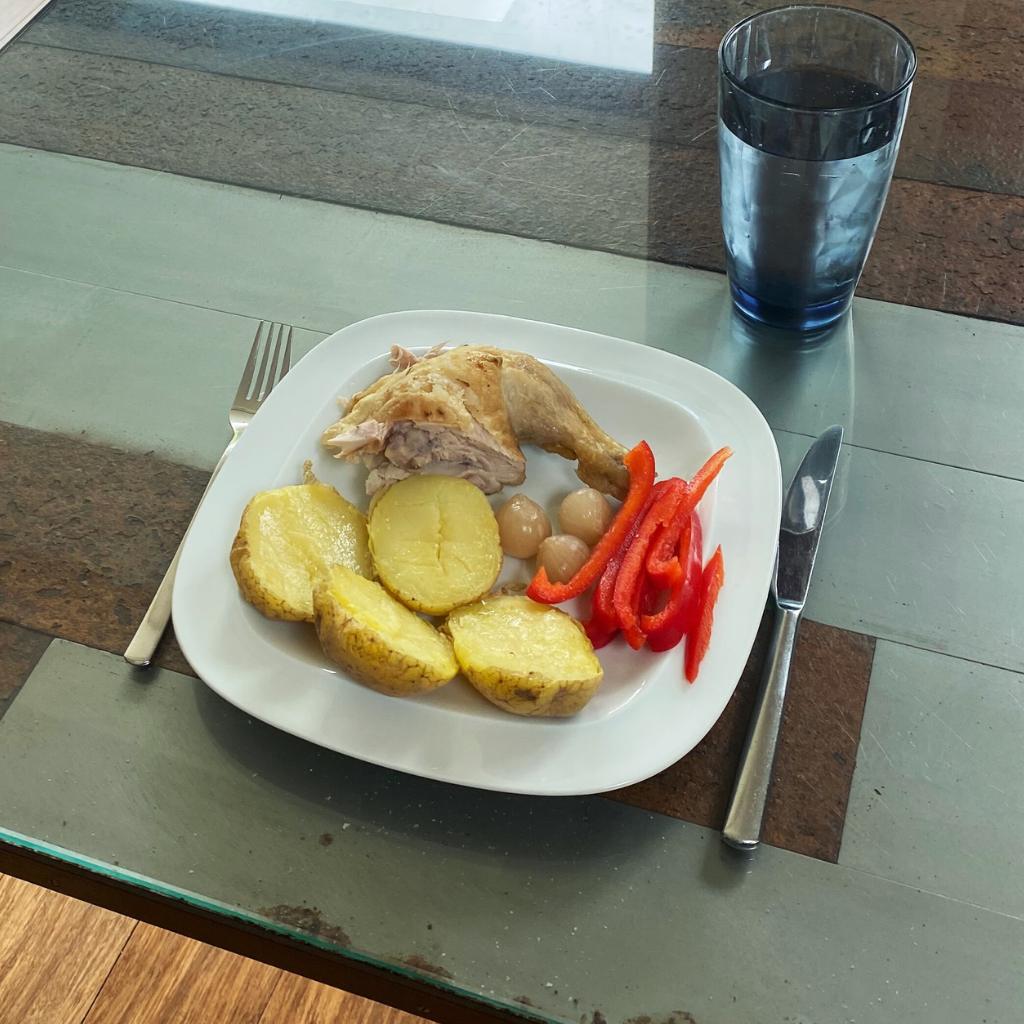
What’s my approach to protein?

On a typical recovery day, I definitely achieve the 1.2g per kg in body weight. But, my diet differs between training days and recovery (non-workout) days. I prioritise protein after my workout for at least the next 24 hours.
But, I also make sure I get enough carbohydrate and water. Your muscles are actually 76% water and carbohydrate is required to replace glycogen after intense exercise.
Immediately after my workout, I drink lots of water and some pure sugar carbohydrate to help replace the glycogen in my muscles. I will then wait for 45 mins or more before eating a high protein meal that includes carbohydrate. This regimen has definitely worked better for me, than the post workout protein shakes of old!
Steve — MiniWorkoutDad
References
[1] Age-Related Sarcopenia in Humans Is Associated with Reduced Synthetic Rates of Specific Muscle Proteins – Proctor D.N., Balagopal P., Nair K.S., The Journal of Nutrition, February 1998.
[2] Aging Is Accompanied by a Blunted Muscle Protein Synthetic Response to Protein Ingestion – Benjamin Toby Wall, Stefan H. Gorissen, Bart Pennings, René Koopman, Bart B. L. Groen, Lex B. Verdijk, and Luc J. C. van Loon, PLOS ONE Journal, November 2015.
[3] Dietary Protein Considerations to Support Active Aging – Benjamin T. Wall, Naomi M. Cermak, and Luc J. C. van Loon, Sports Medicine, October 2014.
[4] Rational Use of Protein Supplements in the Elderly—Relevance of Gastrointestinal Mechanisms – Ian Chapman, Avneet Oberoi, Caroline Giezenaar, and Stijn Soenen, Nutrients, April 2021.
[5] Dietary Protein Distribution Positively Influences 24-h Muscle Protein Synthesis in Healthy Adults – Madonna M. Mamerow, Joni A. Mettler, Kirk L. English, Shanon L. Casperson, Emily Arentson-Lantz, Melinda Sheffield-Moore, Donald K. Layman, and Douglas Paddon-Jones, The Journal of Nutrition, January 2014.
[6] Amino Acids and Muscle Loss with Aging – Satoshi Fujita and Elena Volpi, The Journal of Nutrition, January 2006.
[7] Older adults have delayed amino acid absorption after a high protein mixed breakfast meal – A.M. Milan, R.F. D’Souza, S. Pundir, C.A. Pileggi, M.P.G. Barnett,J.F. Markworth,D. Cameron-Smith,Cameron Mitchell, The Journal of Nutrition, Health and Aging, October 2015.
[8] Dietary protein recommendations and the prevention of sarcopenia – Douglas Paddon-Jones and Blake B. Rasmussen, Current Opinion in Clinical Nutrition and Metabolic Care, January 2009.
[9] A high proportion of leucine is required for optimal stimulation of the rate of muscle protein synthesis by essential amino acids in the elderly – Christos S Katsanos, Hisamine Kobayashi, Melinda Sheffield-Moore, Asle Aarsland, Robert R Wolfe, American Journal of Physiology-Endocrinology and Metabolism, August 2006.
[10] Is the Optimal Level of Protein Intake for Older Adults Greater Than the Recommended Dietary Allowance? – Elena Volpi, Wayne W. Campbell, Johanna T. Dwyer, Mary Ann Johnson, Gordon L. Jensen, John E. Morley, and Robert R. Wolfe, The Journals of Gerontology: Series A, June 2013.
[11] The effect of protein timing on muscle strength and hypertrophy: a meta-analysis – Brad Jon Schoenfeld, Alan Albert Aragon & James W Krieger, Journal of the International Society of Sports Nutrition, December 2013
[12] Changes in Kidney Function Do Not Differ between Healthy Adults Consuming Higher- Compared with Lower- or Normal-Protein Diets: A Systematic Review and Meta-Analysis – Michaela C Devries, Arjun Sithamparapillai, K Scott Brimble, Laura Banfield et al, Journal of Nutrition, November 2018