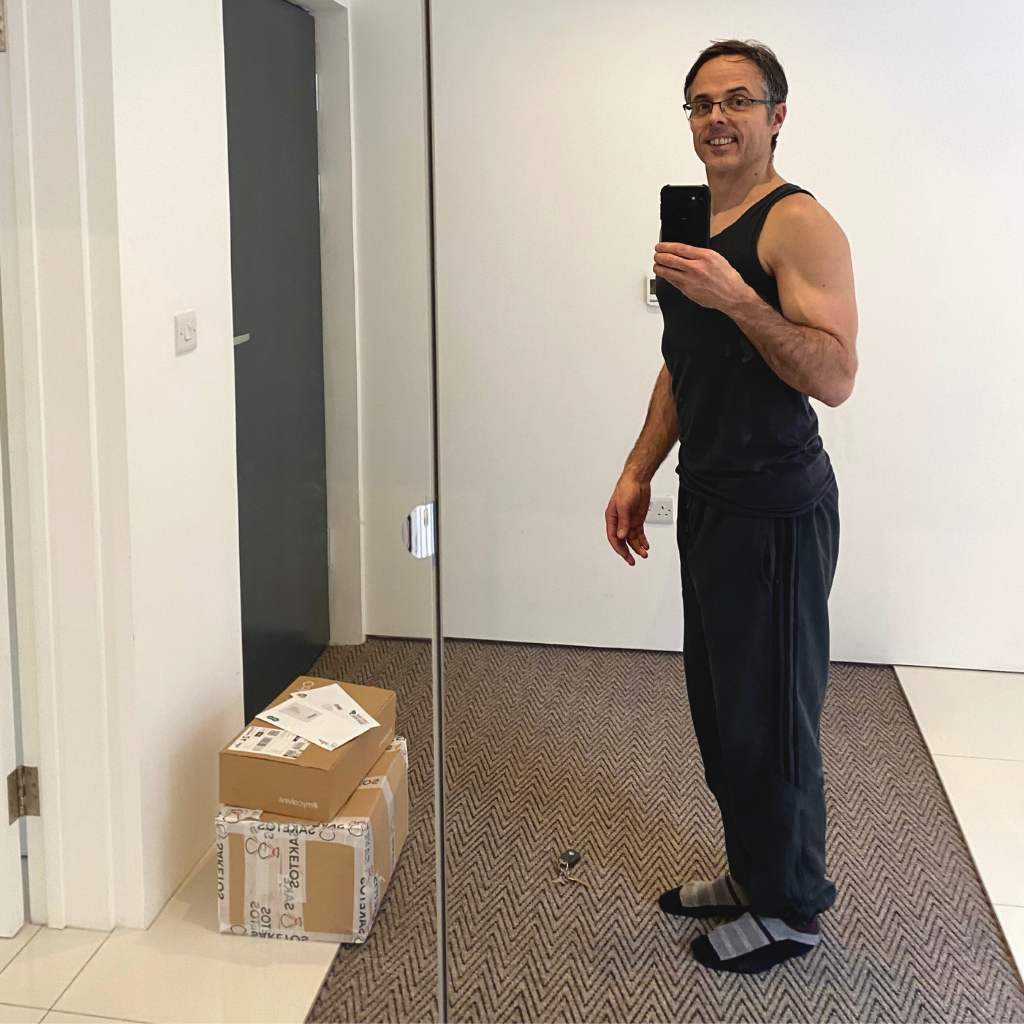

I'm Steve — MiniWorkoutDad!
The two things that decide if you achieve your fitness goal
Are the hype and half-truths of the fitness industry hindering your progress? Once you’re clear on exactly what your workout does and what you need to do to support it, results get easier!
Too long, didn’t read (summary)…
Workouts cannot do a lot of the things the fitness industry claims – like burn fat, tone flabby bits, or remove fat from specific areas.
Your workout only does one thing: sends a signal to your body of what you want it to be capable off.
Your body cannot adapt to your signal in the ways you desire, unless you supply it appropriately.
The signal and supply in your fitness regimen need to match your goals, like this…
The key takeaways: maximise your signal, but don’t neglect your supply factors. Workouts are crucial but diet drives weightloss.
What’s my own combination of signal and supply…?
↓↓↓ Read the full article to find out more ↓↓↓
What’s the best way to achieve any goal – in life, at work, wherever..? To have an effective plan, and execute it effectively, right? But, in fitness, knowing what is an effective plan is confusing…
For decades, fitness marketing has exagerated and plain lied. And still does!
“This workout trims your thighs!”
“This class torches calories!”
“Six weeks to your six-pack!”
It’s all nonsense. The facts are:-

- No workout is a fat-burning ‘furnace’. Science says, at best, you burn 20% of your calories voluntarily.
- No workout can “tone” fat or turn it into muscle. It’s physically impossible. They are completely different structures.
- No workout can remove fat from a specific area of your body. You’re working the muscles underneath the fat, not the fat. There’s no fat-burning connection or communication between the two.
By now you might be thinking, “what the heck am I working out for then? I only want to shift a few pounds!”
Well, you definitely need to workout and especially if you want to lose fat and here’s why…
Your Workout’s One Job: Send a Signal
Your body doesn’t change during exercise. You’re not melting fat, nor building muscle, as you toil away.
What you are doing, is telling your body what you need it to be able to do. And that’s really important, whatever your fitness goal – including weight loss.
But, all that sweating is for nothing, without the right supply. Because it’s actually supply that fuels change.

My 62lb GripSack 50-70 sandbag set up for strength and endurance.
You can buy your own from…
Supply – the Gatekeeper to Success
The reality is, your body can only adapt if you fuel it appropriately. And, what’s appropriate depends upon your goal.
You can tax your muscles until they ache but, if you don’t supply the right nutrients, you’ll struggle to build muscle.
Building muscle means eating enough protein, but also eating more calories than you need. Why? Because muscle is expensive to maintain, so your body only builds bigger muscles when energy is abundant.
Likewise, if you want to lose fat, you MUST eat less calories than you need.
Why bother working out for fat loss then? Because muscle is expensive, so your body would rather burn muscle than fat.
When energy is in short supply (because you’re dieting), you need to make the case for preserving muscle.

Dieting without strength training can create a vicious cycle: you lose muscle (and less fat), which lowers how much energy you need daily, so now you eat less and still get fatter! (That’s why weight gain often accelerates after a crash diet).
So, while protein is the foundation of muscle, it’s calories that drive change. Oh, and it’s sleep that cements the results, because change happens while you sleep; no sleep, no change.
The bottomline is: get supply wrong and your workouts are going to waste.
Match Signal & Supply to Your Goal
| Goal | Signal | Supply |
| Fat loss | Push your strength to protect muscle | High protein with a calorie deficit |
| Muscle/ strength | Push your strength: “I need bigger muscles!” | Calorie surplus. High protein. |
| Fitness/ endurance | Push your heart rate: “I need to be able to work harder” | Extra protein. Calorie control to stay lean. |
| Longevity* | Push your strength and your heart rate. | High protein. Calories according to primary need* |
*Longevity supply depends upon your immediate priority: fat loss or strength building. If you’re lean-ish but lacking muscle, supply should be in calorie surplus (to build muscle). Alternatively, if you’re carrying too much fat, you may use a calorie deficit, to shift those unwanted pounds first.
Your Takeaways?
Train to Maximise Your Signal
More (volume) isn’t better. More intense is better.
Don’t add volume. Add amplitude. Focus on intensity, not time served.
Don’t Neglect Supply
You can train as hard as you want. If you don’t address supply, then real progress will elude you.

Workouts are Crucial, But You Diet for Fat Loss
Working out won’t burn much fat. But, it will protect your muscle while you lose weight and that’s essential. For fat loss, you must acheive a calorie deficit in your diet.
So, what’s my signal and supply?
Well, my goal is longevity.
And, I started out having lost a lot of muscle, but hadn’t gained too much fat. So, my immediate priority was muscle building.
But, longevity, demands fitness and endurance too; a healthy heart and lungs to back up your strength.
So, to produce my signal, I do my workout with a heavy bag (>40% of my body weight) and I hit my theoretical heart rate max. more than once per workout (I am blowing hard from 3 cycles in and try to rest as little as possible).
For supply, I eat a small calorie surplus (I don’t count them, it’s just intuitive now) and a high protein diet. And, yes, I eat carbs and healthy fats.
I use my 3 x 25 minute workouts a week (and nothing else), to send an unambiguous signal to my body. The rest of the time time I get on with life, but make sure to take good care of supply. That’s it!
Steve — MiniWorkoutDad