
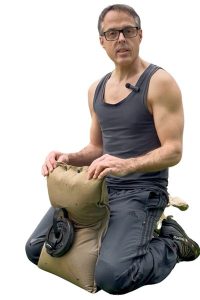
I'm Steve — MiniWorkoutDad!
Are You Strong Enough To Live Longer?
If you’re training really hard, you want to know it’s actually achieving something, right? Discover how to benchmark your strength across critical indicators that predict longevity.
How to know the true value of your training?
When you’re doing any kind of exercise, having targets is a great motivator. And, what better targets than those that predict longevity health, according to scientific studies?
Imagine if you could do some simple tests, every month, to see if you are reducing the risk you’ll develop chronic age-related illnesses?
And, you could know that you’re building strength and fast-twitch muscle fibres – instead of losing them – thereby reducing your risk of fall, broken bones and osteoarthritis?
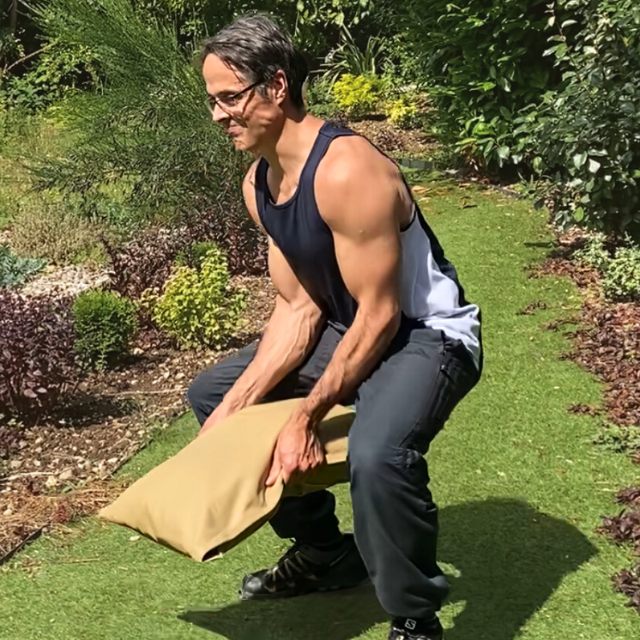
Well, you can and here’s how to do it. But first, a quick recap on why strength and muscle mass are so important as we age.
Why maintaining muscle is essential to ageing well
When we lose muscle, we increase our risk of developing life-ending or life-limiting diseases or experiencing life-changing injury. Here’s what the scientists say:
- “[skeletal muscle loss] is also associated with acute and chronic disease states, increased insulin resistance, fatigue, falls, and mortality” [1]
- “Epidemiological studies in humans suggest that skeletal muscle ageing is a risk factor for the development of several age-related diseases such as metabolic syndrome, cancer, Alzheimer’s disease, and Parkinson’s disease.” [3]
The problem is, from our fourth decade onwards, our bodies automatically begin shedding muscle. A process called Sarcopenia atrophies (shrinks) our muscles – especially the fibres we need to save ourselves in trips or falls.
- Sarcopenia can begin as early as your thirties! And, it appears that skeletal muscle mass and strength decline in a linear fashion, with up to 50% of mass being lost by your seventies. [1]
- “[Through Sarcopenia] Atrophy of muscle fibers is disproportionally distributed with higher atrophy rate of type IIa fast twitch (FT) muscle fibers and their motor units” [2]
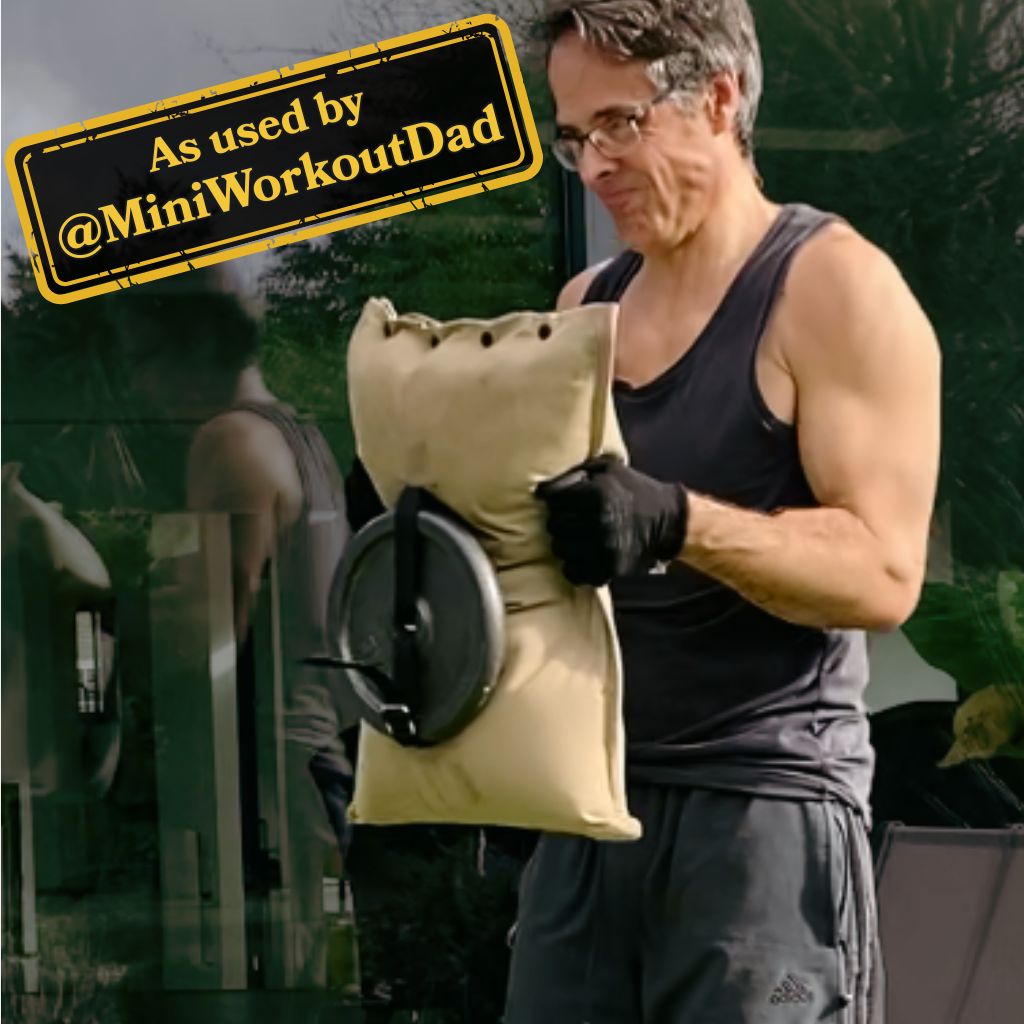
Build capability that shows — from your grip up…
Modern life makes being in shape a struggle. GripSack changes that in 75 minutes a week.
Find out moreEven worse than increased risk of disease and increased risk of injury, is the growing evidence that skeletal muscle is an “organ” that actively influences ageing; that it’s a “’sentinel tissue’, i.e. the earlier onset of age-related degeneration in muscle may affect ageing in other tissues.” [3]
In other words, we age as we lose muscle. (You can read my full article on How Your Workout Could Slow Ageing here)
This is why you need to know where you stand, so you can act to improve your future.
Tests to Benchmark Your Longevity
Fortunately, scientific studies have collected strength data and linked that data to the risk of developing age-related illnesses and physiological conditions.
Benchmark No.1 – Grip Strength
Grip strength is one of the most widely used proxies for estimating the overall physical strength of participants in studies. And, it’s ability to predict longevity is quite incredible.
For example, a study found centenarians belonged 2.5 times (95% confidence interval) more often to the highest third of measured grip strength in midlife [4]. So, high midlife grip strength seems infer greater longevity.
Another study discovered mortality declined, irrespective of body mass index, as grip strength measured in middle-age increased[5].
The mortality rates in this study [5] were 24.8 in the lowest, 18.5 in the middle, and 14.0 in the highest third of grip strength tertiles (thirds). And, whether participants were fatter or thinner (on Body Mass Index) didn’t correlate. Where as, when participants were sorted into thirds by Body Mass Index, there was a gradient of decreasing mortality risk with increasing grip strength in every third.
But don’t rush out and buy those spring grip exercisers! We don’t want to build grip strength specifically; we want to measure it as an indicator of overall strength.
Workout your whole body to increase your functional strength and amount of lean muscle mass. Periodically measure your strength using a grip strength dynamometer.
Doing my workout with sufficient weight will build muscle. Science suggests it will especially build the fast-twitch muscle fibres, disproportionately lost through Sarcopenia, that provide explosive strength.
I’ve already ordered a £20/ $25 grip strength dynamometer on Amazon to track this metric and benchmark myself, because we have data!
Normative values for hand grip strength in kilograms by age – Men[6]
| Male age group* | 25th centile | 50th centile | 75th centile |
| 30 – 34 | 40 | 46 | 51 |
| 40 – 44 | 42 | 47.1 | 52 |
| 50 – 54 | 39.6 | 44.6 | 50 |
| 60 – 64 | 35 | 40 | 46 |
| 70 – 74 | 31.2 | 35.1 | 40 |
Normative values for hand grip strength in kilograms by age – Women[6]
| Female age group* | 25th centile | 50th centile | 75th centile |
| 30 – 34 | 23.3 | 27 | 30.1 |
| 40 – 44 | 24 | 28 | 31 |
| 50 – 54 | 22 | 25.1 | 29 |
| 60 – 64 | 20 | 22 | 26 |
| 70 – 74 | 16 | 20 | 23 |
*Note: I have selected every other age band to avoid data overload. You can split the difference between the band above and below your age or look up the specific data in the linked source. You’ll also find the lowest 5th and highest 95th centile data there.
Not clear on your “centiles”
Reading centiles is easier than it looks. 25% of participants squeezed less than the number in 25th centile box. Likewise, if 52 year old me squeezed over 50kg (the 75th centile), then I’d be in the top 25%.
Benchmark No.2 – Chair Stand Test
This one is so easy to do. You can set it up easily in your own home today and get someone to time you on their smartphone.
The 5 repetition chair stand test, or 5 times sit to stand, or even 5TSTS as it’s sometimes known, is widely used in clinical settings to assess strength, function and frailty.
It is used in geriatrics, stroke, Parkinson’s and COPD assessment, plus physio-therapy and more. It is considered a valid measure of functional lower limb muscle strength.
The speed at which this task can be completed is the key factor.

How you do the test
Take a dining chair or similar unsprung upright armless chair (ideal seat height 43-47cm) and butt it up against a wall to stop it creeping backwards. Sit in the chair, with your arms folded across your chest. You’re going to get up five times as quickly as possible from this seated position. The time starts when seated and ends when standing for the 5th time.
Like grip strength, the 5TSTS test is an indicator of overall physical strength. As such, we should expect higher scores to be linked to lower mortality and increased longevity in the same way grip strength is.
Fortunately, we have data available again, enabling you to benchmark your current ability and set targets.
Normative values for 5TSTS test in seconds by age – Men[6]
| Male age group* | 25th centile | 50th centile | 75th centile |
| 30 – 34 | 5.5 | 6.6 | 7.5 |
| 40 – 44 | 5.7 | 6.8 | 7.8 |
| 50 – 54 | 6.3 | 7.3 | 8.5 |
| 60 – 64 | 7.0 | 8.0 | 9.1 |
| 70 – 74 | 7.7 | 8.9 | 10.4 |
Normative values for 5TSTS test in seconds by age – Women[6]
| Female age group* | 25th centile | 50th centile | 75th centile |
| 30 – 34 | 5.5 | 6.5 | 7.6 |
| 40 – 44 | 5.9 | 6.8 | 7.7 |
| 50 – 54 | 6.2 | 7.2 | 8.1 |
| 60 – 64 | 6.7 | 7.8 | 9.0 |
| 70 – 74 | 7.2 | 8.2 | 9.7 |
Interpreting the data
This table reads the other way around to the grip strength one. It works like this: 25% of 40-44 year old women do the 5TSTS test in less than 5.9 seconds; 75% do it in less than 7.7 seconds. So, if you’re 42 and female and it takes you 7.7 seconds or more, you’re among the bottom 25%.
Are you ready to start benchmarking?

For me, this is a no-brainer, because my workout object is longevity. I don’t do those tough workouts for the mirror; I do them because the science says they’ll increase the likelihood I live a fuller life, for longer. I’ve already ordered my grip strength tester!
But, even if you have different goals, this simple benchmarking can help you measure your progress and motivate you to push on. It introduces a certain gamification to the old routine. Can your workouts improve your 5TSTS by developing explosive power in your legs? Let’s find out by being really disciplined in those torturous isometric squats every workout for 6 weeks and then testing! What happens if you increase the weight and then measure again?
This workout is all about developing functional strength. Now we have simple ways to test that, won’t it be amazing to observe real improvements in exactly that?!
Steve — MiniWorkoutDad
Was this useful? If you don’t want to miss out on tips like this (and you haven’t subscribed already), just submit this form ⇩
References
1 – Sarcopenia in older adults, Jeremy D. Walston. Published 2012.
2 – Strength and muscle mass loss with aging process. Age and strength loss, Karsten Keller and Martin Engelhardt. Published 2013.
3 – The influence of skeletal muscle on systemic aging and lifespan, Fabio Demontis, Rosanna Piccirillo, Alfred L. Goldberg and Norbert Perrimon. Published 2013.
4 – Midlife muscle strength and human longevity up to age 100 years: a 44-year prospective study among a decedent cohort. Taina Rantanen, Kamal Masaki, Qimei He, G. Webster Ross, Bradley J. Willcox & Lon White. Official Journal of the American Aging Association (AGE), May 2011
5 – Muscle Strength and Body Mass Index as Long-Term Predictors of Mortality in Initially Healthy Men. Taina Rantanen, Tamara Harris, Suzanne G. Leveille, Marjolein Visser, Dan Foley, Kamal Masaki, Jack M. Guralnik. The Journals of Gerontology: Series A, Volume 55, Issue 3, 1 March 2000
6 – Normative values of muscle strength across ages in a ‘real world’ population: results from the longevity check-up 7+ project. Francesco Landi, Riccardo Calvani, Anna Maria Martone, Sara Salini, Maria Beatrice Zazzara, Matteo Candeloro, Hélio José Coelho-Junior, Matteo Tosato, Anna Picca, Emanuele Marzetti. Journal of Cachexia, Sarcopenia and Muscle, 04 November 2020.